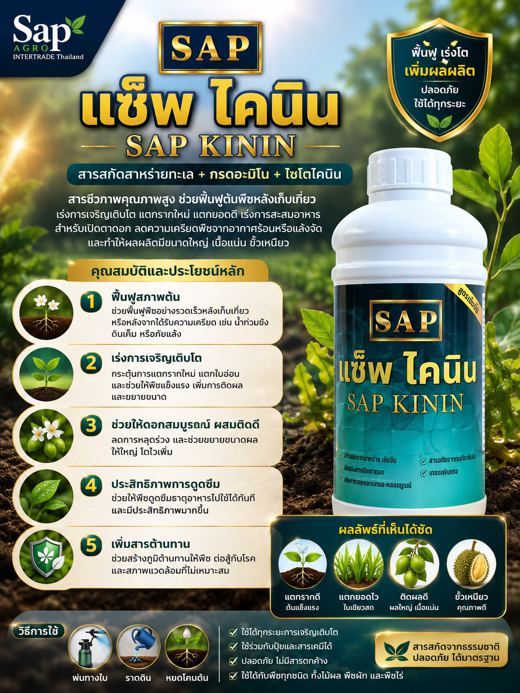
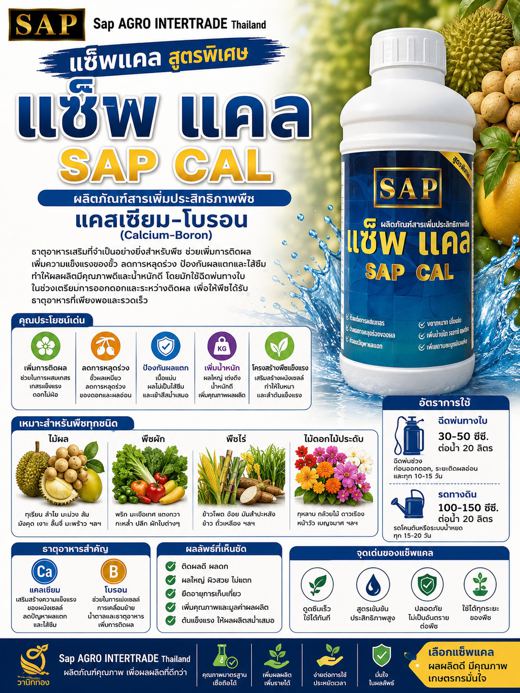
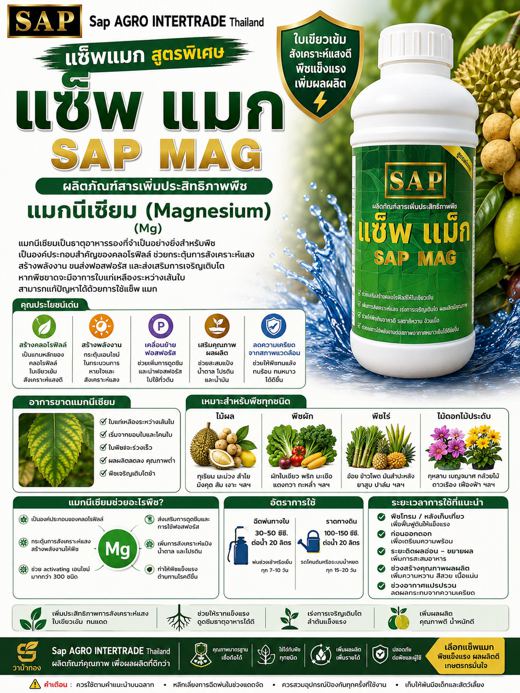
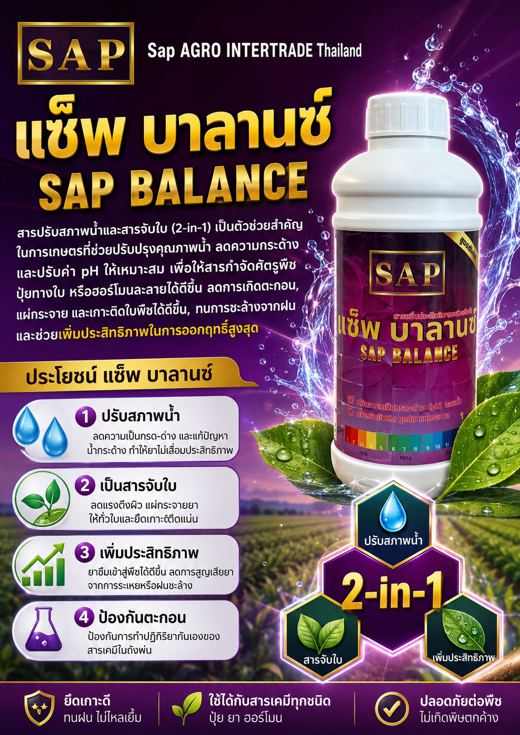
Run-down trees, unsettled weather, poor fruit set? Meet “brassinolide + amino acids” for recovery and growth
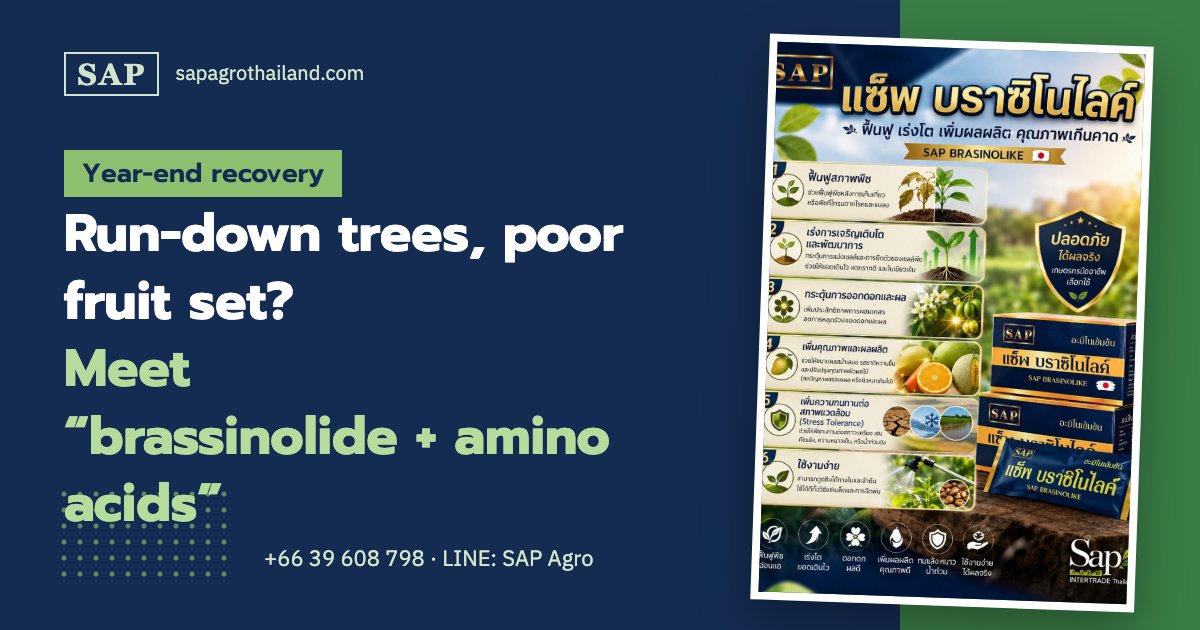
At the end of the year, mornings turn cool, afternoons are hot and the rain stops. Many fruit trees have just been harvested or are getting ready to flower. Trees that have not fully recovered show the same signs: dull leaves, slow new shoots, few flowers, or flowers that drop easily. This is when many growers look for help to get their trees back in shape for the new season.
This article introduces brassinolide and amino acids, the two main components of SAP Brasinolike: how they work in the plant, what they help with, and how to use them well.
What is brassinolide?
Brassinolide belongs to the brassinosteroids, a group of hormones that plants make naturally. It was first found in the pollen of rapeseed, a brassica, and is the most active member of the group. A key feature is that it works at very low doses.
- Drives cell division and cell elongation, the basis of new shoots, new leaves and root growth
- Plays a part in flowering and pollination by supporting pollen tube growth
- Helps plants cope with stress. Plant physiology research has found that brassinosteroids help plants handle drought, cold and waterlogging better
What do the amino acids do?
Amino acids are the building blocks of proteins. Plants make them from the nitrogen they take up, which costs a lot of energy. Feeding amino acids through the leaves is like delivering ready-made materials the plant can use straight away. This matters most when trees are run down, just harvested, or facing poor weather.
Six benefits of SAP Brasinolike
- Plant recovery: helps trees recover after harvest, or after damage from disease and pests
- Growth support: stimulates cell division and elongation, for active shoots, new roots and green leaves
- Flowering and fruit set: supports pollination and reduces the drop of flowers and young fruit
- Fruit quality: helps fruit size more evenly, with better taste and skin
- Stress tolerance: helps plants cope with drought, cold or waterlogging
- Easy to use: absorbed through leaves and stems; suitable for spraying and for seed soaking
When to use it
- After harvest, when trees need to recover and prepare a new flush of leaves
- During leaf flush, to support shoot and leaf growth
- Before and during flowering, to support pollination and fruit set
- Before or during unsettled weather, such as a cold snap, a long dry spell or after waterlogging
How often to spray, and the best timing, differ from crop to crop. Message our team on LINE and we will help you plan for your farm.
Rate and directions
- Use 1 sachet (100 g) per 1,000 litres of water (equal to 2 g per 20 litres). Do not raise the rate: using more of a plant hormone than recommended does not improve results.
- Mix with a small amount of water first, then pour into the spray tank and stir well.
- Spray the whole canopy, upper and lower leaf surfaces, in the early morning or late afternoon when the sun is soft.
- If tank-mixing with other products, test in a small jar first and check that nothing settles out or clumps.
- For seed soaking, ask our team for the rate and soaking time before use.
Precautions
- Read the label carefully before every use and follow the recommended rate.
- Wear gloves and a mask when mixing and spraying, and wash your hands afterwards.
- Store in a cool, dry place out of direct sunlight, keep sachets sealed, and keep out of reach of children and away from food.
Summary
SAP Brasinolike combines brassinolide, a natural plant hormone used for growth and stress response, with amino acids the plant can use straight away. It suits post-harvest recovery, the run-up to flowering, and the unsettled weather at the end of the year. Use 1 sachet per 1,000 litres of water, spray evenly in soft light, and read the label before every use.
Always read the label carefully before use. Follow the label rates and directions, and wear protective equipment when spraying.